4/22/2026
2-image carousel
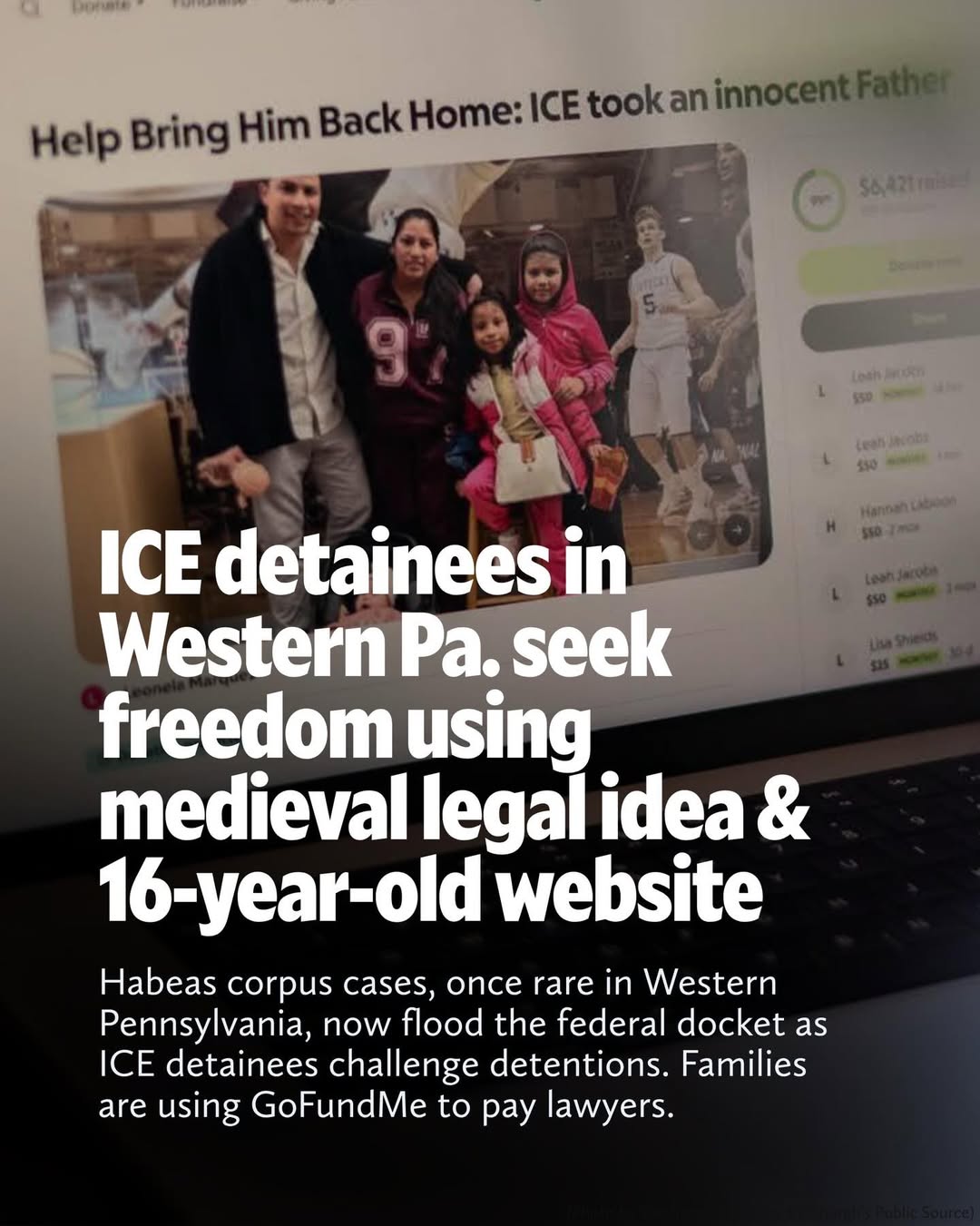
“Along with the emotional pain,” of having her husband detained by ICE, Leonela Marquez wrote on a GoFundMe posted in January, “we are now facing a terrifying reality: I don’t know how I will pay rent. I don’t know how I will buy food. I don’t know how I will afford diapers and formula.”
“And now we also must pay thousands of dollars in legal fees, because fighting for my husband’s freedom has a cost we cannot afford alone.”
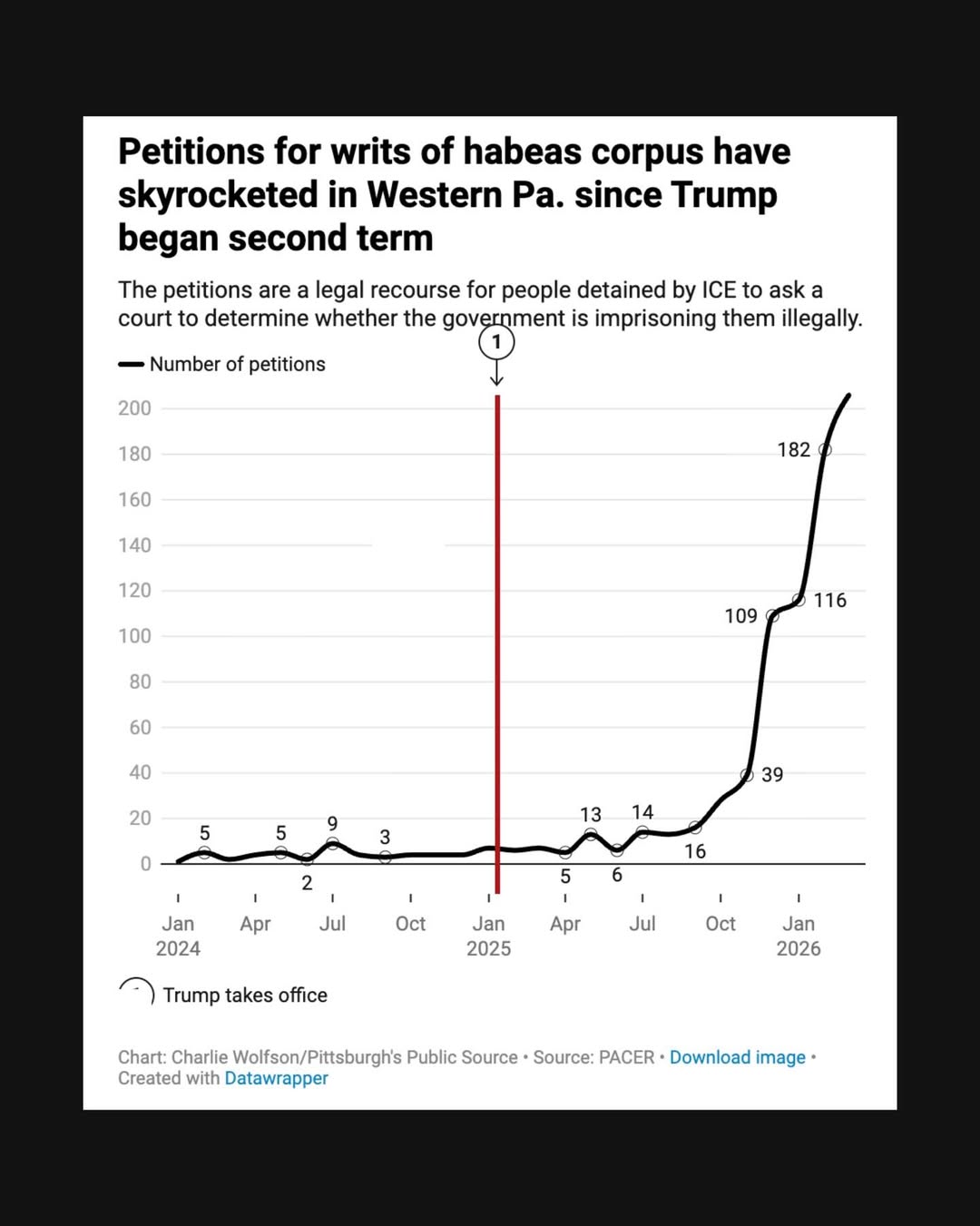
Marquez’s husband, Mario Eduardo Fajardo Aviles, is one of hundreds of people with petitions for habeas corpus moving through Pittsburgh’s federal courthouse. Once a rarity in the Western District of Pennsylvania, habeas cases now make up a large share of the docket. That’s driven by the presence of the Moshannon Valley Processing Center in Clearfield County, a novel interpretation of the law by the Trump administration and the determination of families doing whatever they can — including asking for the help of strangers — to gain freedom for their loved ones.
GoFundMe pages like Marquez’s — which has raised nearly $6,400 of the $6,500 goal — are enabling some families to compete with the federal government in court. When federal lawyers lose, they are so far not appealing those decisions. That may be an effort to avoid risking a higher court decision that could constrain the administration’s detentions.
A spokesperson for the Pittsburgh U.S. Attorney’s office declined to answer Public Source’s questions for this story.
Read the full story at publicsource.org.
✍️: @charliewolfson1
📸: @stephaniestrasburg